

Who gets to live on the land?
Historian Jo Guldi argues that land occupancy struggles aren’t just about fairness; they’re about humanity’s survival.
We learned last week that the Department of Education is taking steps to provide a measure of debt relief for students victimized by the whole Corinthian Colleges debacle. That's ostensibly a good thing, but it comes with a good deal of red tape—which means not everyone will get relief quickly, or at all.

I stood in the damp grass, on a warm afternoon, eating a veggie dog at the foreclosure-free picnic, with members of Mercy Junction. My husband started a worshiping community in Chattanooga, and they determined that housing issues would be a central part of their ministry. So they gathered, in solidarity with a man who was facing foreclosure after losing his job.
Every year, Unco is a good gauge to find out what’s exciting and difficult about being an innovative church leader. Here are ten things that I gleaned from our recent gathering.
Even though some of the large Occupy demonstrations have pulled up their tent pegs, many are still working to help Americans get out of overwhelming medical debt or fight against foreclosures.
It is easy to conclude that the Occupy movement was a flash in the pan, enacted by disgruntled people without a plan or staying power, a passing whim to be forgotten. This book insists otherwise.
I’m proud to be a part of a movement whose great concern is learning to love your neighbor as you love yourself. And as we move into the new year, I hope those voices of justice will grow stronger—and I wish for some other things as well.
This spring, the most interesting question for me about the Occupy movement isn't whether it will find focus or whether it will revive or whether it will make a difference in the election. What I want to pay attention to is the ongoing and generative outpouring of creative politics.
The Occupy movement is rich in unedited signs. In my mind, creative placarding will forever be its legacy.
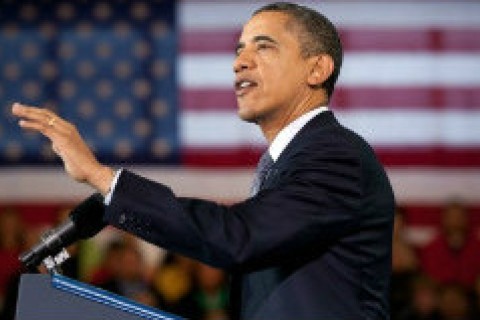
Tuesday's speech was the most fired up and the readiest to go that we've seen Obama in a good long while.
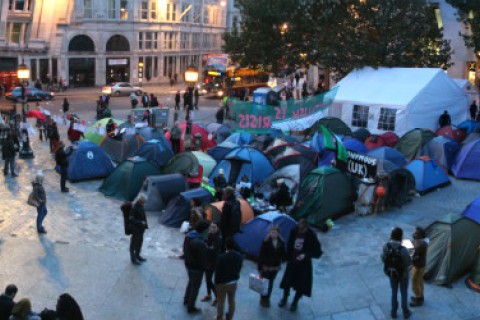
Church leaders can appreciate the challenges
that St. Paul's has faced. Yet there is something profoundly right about
a moral protest in a cathedral courtyard.
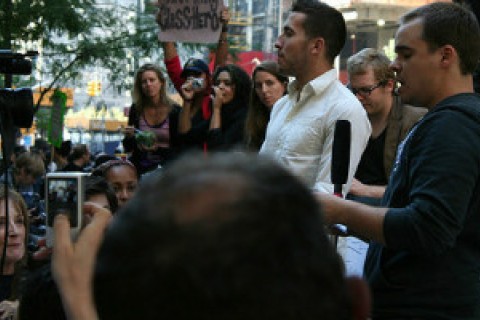
Whatever its explicit message, Occupy Wall Street has made a powerful statement with its very mode of existence.