The CCblogs network is a community of independent bloggers exploring the Christian faith. The Christian Century facilitates the network but does not edit posts or take responsibility for them.
I’m taking a class on the Gospel of Luke this semester, and
one of my assignments is to engage in an ongoing spiritual practice
related to that particular Gospel. So for the entire semester I am
reading the Magnificat daily. It’s a passage that I’ve been drawn to in
recent years, but it has been particularly illuminating to be dwelling
on it during Lent this year, since it is typically confined to the Advent
season. Somehow the triumphal language of the justice that God has
already accomplished fits with the modern treatment of Advent as a
celebratory season. But Lent is a season of penance, which puts an
entirely different spin on the text.
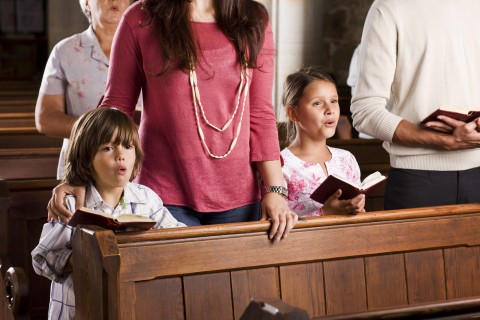
Recently I had a conversation with one of the young parents in my
congregation. We were having a far-reaching discussion that
included Sunday School, next summer's Vacation Bible School Program, and
the changing nature of our culture and church attendance. When I
offered the idea that "going to church" is not as culturally normal now
as it was when I was growing up, she replied, "That's right! I think we
are the only ones who go to church among all of our friends." She
continued that she knew that her friends had a wide variety of opinions
and emotions regarding faith, from some who clearly were not interested,
to others who were more ambivalent.
I blurted out, "So, you're sort of like missionaries to your friends."
Recently I learned that the word “Lent” comes from the Old
English ‘lencten,’ which sounds a lot like “lengthen” and, not
incidentally, was the Old English word for Spring–-that time when the
days, well, lengthen.
I’ll post on the lessons for Lent 1 for the rest of this week, but
today my thoughts are focused on what to preach for Ash Wednesday in a parish I don’t know very well. Ash Wednesday is probably a top-five
“liturgies that say more than any sermon ever could” service (with
Maundy Thursday, Good Friday, Easter Vigil and Ordinations).
Oh Peter, how I love thee. You make my craziness seem normal, thank you.
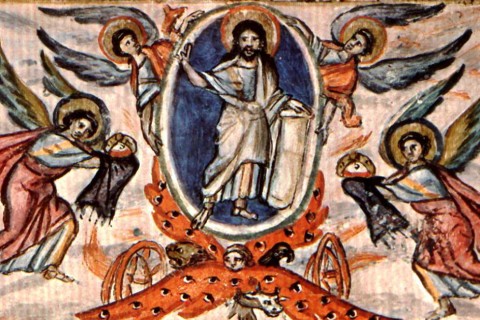
In the midst of the most amazing thing he had seen to this point, the
Transfiguration, Peter stops being present to the glory just long
enough to say, “Master, it good for us to be here. Let’s build three
dwellings: one for Elijah, one for Moses, and one for you.”
Much of the tension in the second season of Downton Abbey has to do
with the fact that the great house has been turned into a respite care
center for army officers. This novel use of the space, coupled with so
many new people about, provides a wonderfully entertaining storyline. In
a weird way, it’s spurred me to reflect on the use of space for
faith-related practices.
I noticed a young family gone absent from worship. She is a gifted
musician and actress; they have two young children. She did a benefit
concert here once full of wonderful musical numbers; all the proceeds
went to cancer research. I had been somewhat connected with them and
eventually found her on Facebook, where I noticed that her religious
affiliation was "atheist."
When
I became a stay-at-home father several years ago, I slowly realized
that all the theology I had studied in seminary, if I were honest,
didn’t connect with my new reality of diapers, spit-up and frozen breast
milk.